Note: This story, which first appeared in the news in February 2024, is being republished.
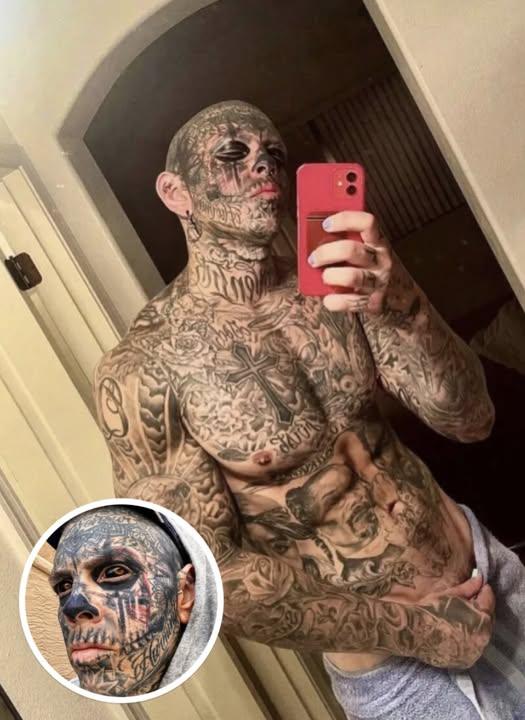
Quest Gulliford has become a lightning rod on social media — not just for surviving cancer, but for the way he’s chosen to tell his story through his body. In a viral TikTok clip that has drawn thousands of comments and millions of views, Quest stands confident and unflinching, his full-body tattoos on display and his boldly dyed eyeballs catching the light. The video is more than a show of extreme body art; it’s an unapologetic portrait of someone who has remade himself in public and invited the world to watch.
His journey with tattoos began early. He first got facial ink at 18, a decision that didn’t sit well with his mother. In a 2019 interview with Inked, Quest recalled her disapproval — not because she opposed tattooing in principle, but because she worried about the scale and permanence of what was happening to his face. As he kept adding pieces, that concern intensified. According to his recollections, the family stage-managed some attempts to slow the process: intervening at parlors, talking with artists, and trying to dissuade larger facial work. Those early interventions read like small, intimate negotiations between a young man asserting his identity and a family trying to keep him safe. Over time, his mother softened about smaller face tattoos, but the larger canvas he chose was always going to be a point of tension.
What makes Quest’s story compelling is how personal hardship and radical self-expression intertwine. He is a cancer survivor — a reality that reshaped more than his outlook on life. Fighting for his health gave his choices a different weight; in the wake of illness, decisions about appearance can feel like acts of reclamation. For Quest, inking his body was a way to mark survival, memory, and identity all at once. Each tattoo reads like a chapter: some subtle and small, others sprawling and elaborate. Together they form a living archive of pain, resilience, and reinvention.
Social media has amplified those choices. In his TikTok videos, Quest doesn’t stage elaborate reveals or lean into controversy for controversy’s sake; he simply presents himself. Viewers see the careful placement of a sleeve, the fine details around the neck, and the moons of shading that curve across his chest. Then there are the strikingly dyed eyeballs — a look that contradicts expectations and invites a second, closer look. Those eyeball modifications, paired with dense tattooing, make a bold visual statement: Quest is deliberately, defiantly different, and he wants that difference to be visible.
Reactions online are predictably mixed. Some viewers celebrate his courage, praising the way he’s embraced his body as both canvas and testimony. They leave comments thanking him for modeling a kind of fearlessness, or for demonstrating that survival can be a catalyst for self-expression rather than a reason to hide. Others are more hesitant, expressing discomfort or worry about health implications. Those responses reflect larger conversations about body autonomy, aesthetics, and the social boundaries of acceptability. What’s clear is that Quest’s presence forces people to reckon with their assumptions about appearance and identity.
Beyond the spectacle, there are quieter moments people miss if they only skim his clips. In interviews and longer-form features, Quest has spoken about practicalities — the financial trade-offs of maintaining a heavily tattooed body, the logistics of undergoing eye-dyeing procedures, and the often-overlooked care required to keep ink looking good. He’s also discussed the emotional labor of living visibly: strangers approaching him on the street to ask questions, family members who have processed their own feelings about his choices, and the surprising friendships formed within tattoo communities. Those details humanize the viral image: this is someone navigating life’s ordinary and extraordinary moments, not just a viral persona.
His story also highlights the way subcultures evolve. Tattooing and extreme body modification were once firmly on the fringes; today they’re part of mainstream visual culture, yet still charged with meaning. For younger viewers especially, Quest’s visibility models an alternative to conventional beauty narratives. In a single TikTok, he can challenge prevailing ideas about professionalism, attractiveness, and what counts as respectable self-presentation. For many fans, that matters: representation of people who look different — who have chosen to alter their appearance dramatically — can loosen rigid expectations about how you are allowed to present yourself to the world.
Ultimately, Quest Gulliford’s viral moment is a complex blend of spectacle and sincerity. The images are arresting — the tattoos, the eyes, the fearless posture — but they anchor an honest life story about survival, family tensions, and the work of carving out a self-defined identity. Whether viewers respond with admiration, discomfort, curiosity, or criticism, one thing is certain: Quest has turned his body into a public diary, and in doing so, he’s invited a global audience to read it. Those inked pages tell a story of hardship met with creativity, and they remind us that sometimes the most powerful narratives are the ones written on skin.